Implementing Odoo for Core Custom
Client Overview
- Client: Core Custom
- Industry: Professional Tennis Equipment & Workshop
- Location: Germany
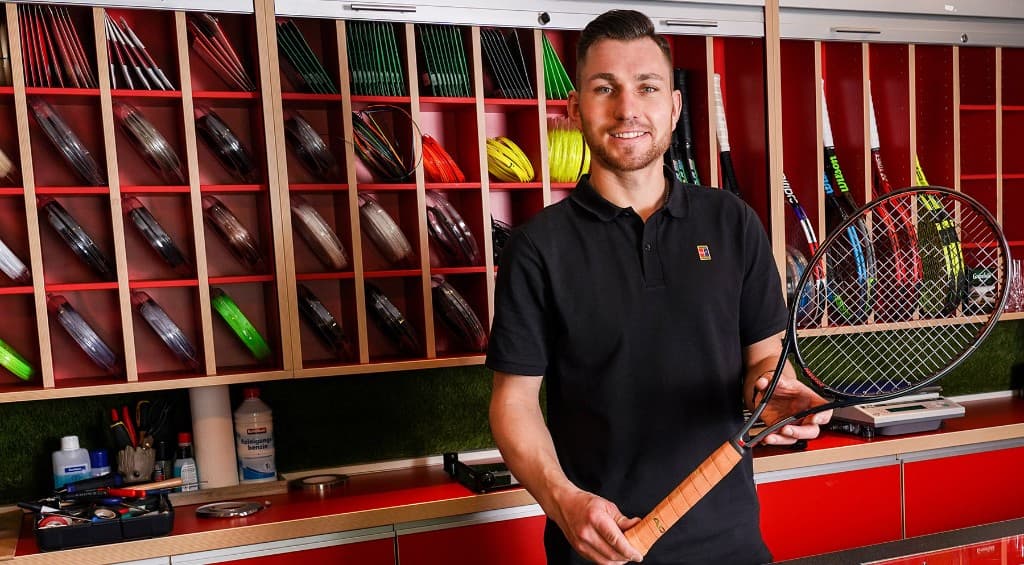
Core Custom is a professional tennis equipment workshop specializing in racket customization, stringing, repairs and performance tuning. Their work requires precision, traceability, and efficient order handling — both for individual players and demanding professionals.
Website: https://core-custom.com/(opens in new tab)
The Challenge
Before implementing Odoo, Core Custom relied on a legacy online system combined with multiple disconnected tools.
This created several critical issues:
1. Too Many Tools, Too Much Manual Work
- Data copied between systems
- Manual updates for inventory
- Separate tracking for repair orders
- Invoicing handled independently
Every process required repetitive actions and human intervention. This not only slowed operations but increased the risk of errors.
2. Complicated Inventory Tracking
Tennis workshops deal with:
- Rackets
- Strings (multiple types, gauges, brands)
- Grips
- Accessories
- Custom parts
Stock tracking was fragmented and not fully reliable. Real-time availability was difficult to verify.
3. Repair Orders Required Heavy Manual Handling
Each racket repair or customization job required:
- Manual job logging
- Status tracking outside a structured workflow
- Manual invoicing after completion
There was no fully integrated lifecycle from intake → work → billing.
4. Vendor Dependency
The legacy system was online-only and entirely dependent on the provider:
- No infrastructure control
- No custom development flexibility
- No advanced automation possibilities
This limited scalability and long-term growth.
The Solution
Odoo 18.0 Community Edition + OCA Modules
We implemented Odoo 18.0 Community Edition, enhanced with selected modules from the Odoo Community Association (OCA)(opens in new tab) ecosystem.
Key areas covered:
- Inventory Management
- Repair & Service Workflow
- Sales & Invoicing
- Customer Communication
- Custom workshop-specific processes
Custom Development & OCA Contributions
Several modules were developed specifically to optimize workshop operations. Where possible, improvements were contributed back to OCA, strengthening the open-source ecosystem and ensuring long-term maintainability.
This approach ensured:
- No vendor lock-in
- Transparent architecture
- Sustainable upgrades
Infrastructure: Powered by Cetmix Tower
The entire infrastructure is deployed and managed using Cetmix Tower.
Core advantages:
- Dedicated own server (no shared SaaS limitations)
- Automated backups
- Controlled update strategy
- Staging clones created on demand
- Full lifecycle management
Unlike SaaS platforms with "staging branch limitations", Core Custom can create staging copies whenever needed — for testing new workflows, modules, or improvements — without disrupting production.
This gives the business full control and technical independence.
The Results
After implementation:
- Repair order management time reduced by 80%
- Inventory management time reduced by 60%
- Invoicing and communication time reduced by 50%
Operational bottlenecks were eliminated. Manual copy-paste processes were replaced by structured workflows. Data now flows automatically between inventory, repairs, and invoicing.
The workshop team can now focus on what matters most: quality craftsmanship and customer service.
Long-Term Impact
This is not a one-time ERP installation.
The project continues to evolve:
- Workflow refinements
- Further automation
- Performance optimization
- Reporting improvements
With a scalable architecture and independent infrastructure, Core Custom is now positioned for sustainable growth — without being constrained by external platforms.
If operational complexity is slowing your business down, it’s time for a structured scalable ERP foundation. Talk to us about building your Odoo system the right way — engineered for long-term performance.